Change is inevitable. But meaningful, sustainable change is rarely easy.
Whether navigating digital transformation, workforce shifts, or climate-related challenges, organisations across all sectors face increasing pressure to adapt. However, many find themselves hitting invisible walls – a complex web of resistance, legacy systems, and uncertainty that keeps progress just out of reach.
In our work at Unquiet, we’ve found that using futures tools, particularly the Futures Triangle with stakeholders, creates a structured yet imaginative space to unpack these dynamics, spark conversation, and build shared commitment toward change.
The Challenge: Barriers to Organisational Change
Despite wide recognition that change is necessary, it is often met with resistance. Common barriers include:
- Cultural inertia: deeply rooted habits, norms, and power structures.
- Fear of uncertainty: discomfort with ambiguity and potential risk.
- Short-termism: prioritising immediate wins over long-term outcomes.
- Fragmented vision: lack of shared understanding of what the future could look like.
- Disengaged stakeholders: employees and communities feeling left out of decision-making.
The 2023 World Economic Forum report highlights a deeper dimension: most CEOs acknowledge the growing importance of futures thinking and preparedness, yet very few feel confident in their organisation’s ability to adapt. According to the report, “many leaders admit to being ill-equipped for the scale and speed of change,” particularly when it comes to engaging stakeholders or imagining multiple possible futures.
This is where foresight comes in, not as a crystal ball, but as a strategic tool to navigate complexity.
How the Futures Triangle helps with mapping change?
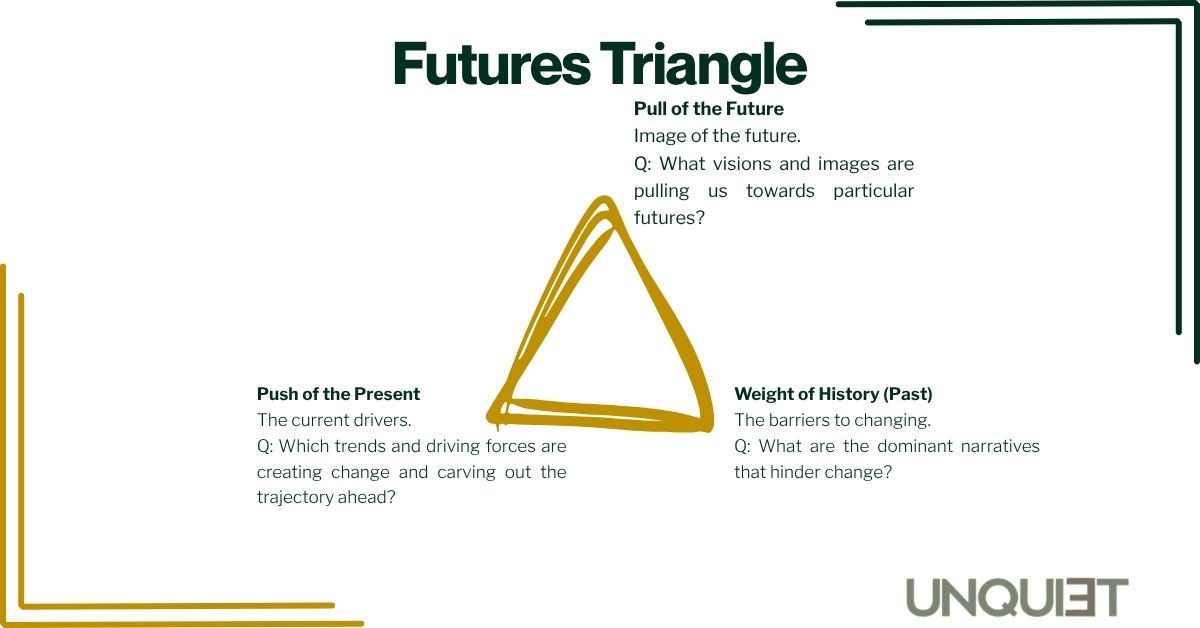
The Futures Triangle, developed by futurist Sohail Inayatullah, helps visualise the dynamics of change by exploring three interrelated forces:
- The Pull of the Future – the compelling visions, goals, and aspirations that inspire change.
- The Push of the Present – the drivers, trends, and external pressures demanding change.
- The Weight of the Past – the legacy systems, cultural patterns, and mindsets that resist change.
This simple but powerful framework gives individuals and teams a shared visual language for discussing change. It helps uncover the assumptions shaping decisions and shows how different stakeholders experience the same system differently.
At Unquiet ® Ltd, we’ve facilitated Futures Triangle sessions across organisations, helping teams identify their future vision while examining what’s holding them back.
Get in touch if you’d like to learn how we can support your change initiative.
Subscribe to the Unquiet newsletter to receive thoughtful reflections on strategy, foresight, leadership, and change, plus updates on new writing, events, and what’s coming next directly to your mailbox.